Wine Tasting Party Ideas and Decorations (Easy, Stylish Tips)

Is there anything better than sharing a good bottle with friends? A wine tasting party brings that joy into your home, with a lineup of bottles, a few simple rules, and plenty of laughs.
At its core, a tasting is easy. Pick a theme (region, grape, price), pour small tastes, compare flavors, and swap notes. Add light snacks that match the wines, then pace the pours so everyone stays fresh and engaged.
Decor sets the tone and makes the night feel special. Think soft lighting, clean table linens, clear labels, and polished glassware. A few thoughtful touches, like numbered mats or place cards, help guests focus, relax, and talk about what they taste.
The right details turn a casual sip into a shared experience. Stylish touches, even on a budget, guide the room and support the wines. Guests will feel excited to try something new, from bright whites to bold reds, in a space that looks intentional.
In this guide, you’ll get easy wine tasting party ideas that anyone can pull off. You’ll find smart decorations, simple activities, and practical tips on setup, flow, and pairings. Use what fits your space and your crowd, and host with confidence.
Create an Elegant Atmosphere with Wine-Themed Decorations
Set the scene with rich color, simple textures, and glowing light. Aim for deep reds, gold accents, and warm neutrals. Add grapevine clippings, wine bottles, and soft fabrics to pull it all together. Keep it easy to source, easy to set up, and easy to clean.
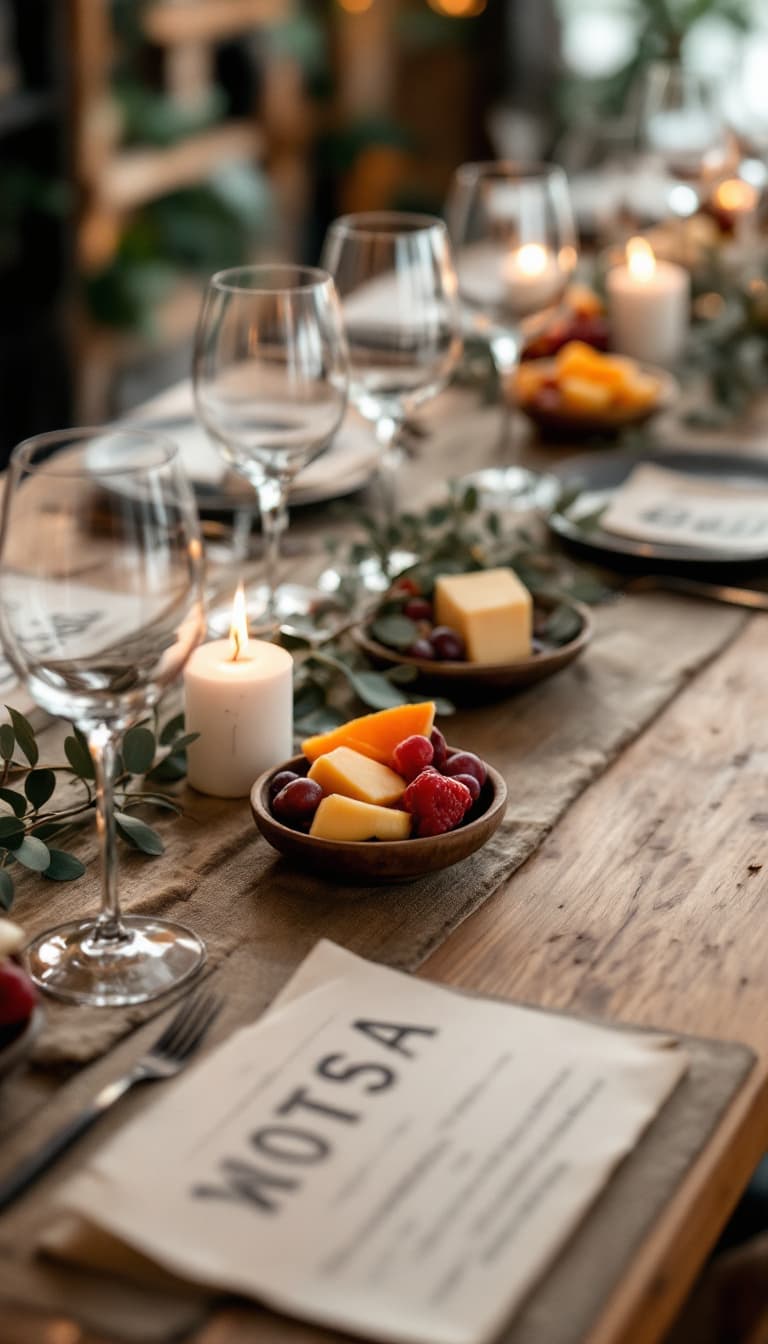
Table Settings That Wow Your Guests
Build your table like a tasting map, clear and beautiful, with a flow that guides guests from left to right.
- Layered linens: Start with a neutral tablecloth, then add a runner in burgundy, olive, or taupe. A strip of burlap adds texture without stealing attention from the wine.
- Centerpieces from bottles: Group empty wine bottles in odd numbers. Slip a few with taper candles, add eucalyptus, grapevine, or small bunches of grapes. Keep height low so guests can see each other.
- Personalized glass tags: Tie small kraft tags or metal charms on stems. Write names or flight numbers with a white paint pen. This keeps tastes organized and avoids mix-ups.
- Edible garnishes: Set short cups with fruit skewers. Think strawberry halves, orange peels, blackberries, and fresh herbs. Guests can reset their palate or garnish a glass of bubbly.
- Seasonal October touch: Scatter pressed fall leaves, mini gourds, or a few sprigs of red maple. Choose one accent color, like copper or burnt orange, to keep it tight.
Place items for smooth tasting:
- Flight order: Line glasses from light to bold. Whites on the left, reds on the right, dessert at the end.
- Pour zone: Keep open space at the head or side of the table for pouring, with a drip tray and towel.
- Tools within reach: Put a corkscrew, a small dump bucket, and water at both ends of the table.
- Snack spacing: Place neutral crackers near the center, richer bites off to the side. That keeps the focus on the wine.
Fast, wallet-friendly upgrades:
- DIY painted glassware: Add a thin frosted ring near the base of tasting glasses with glass paint. It looks custom and helps guests grip.
- Fabric drapes: Clip sheer curtains to command hooks behind the table. It softens the room and frames your setup for photos.
- Numbered tasting mats: Print simple mats with circles labeled 1 to 5. Guests can jot down quick notes as they sip.
Lighting and Backdrop Ideas for Cozy Vibes
Think soft light, warm tones, and small pockets for conversation. It should feel like a Tuscan evening, cozy and unhurried.
- Candles: Use votives in clear holders or tea lights in jars. Cluster them in threes. Keep flames a hand’s width from foliage. Choose unscented so the aromas stay true.
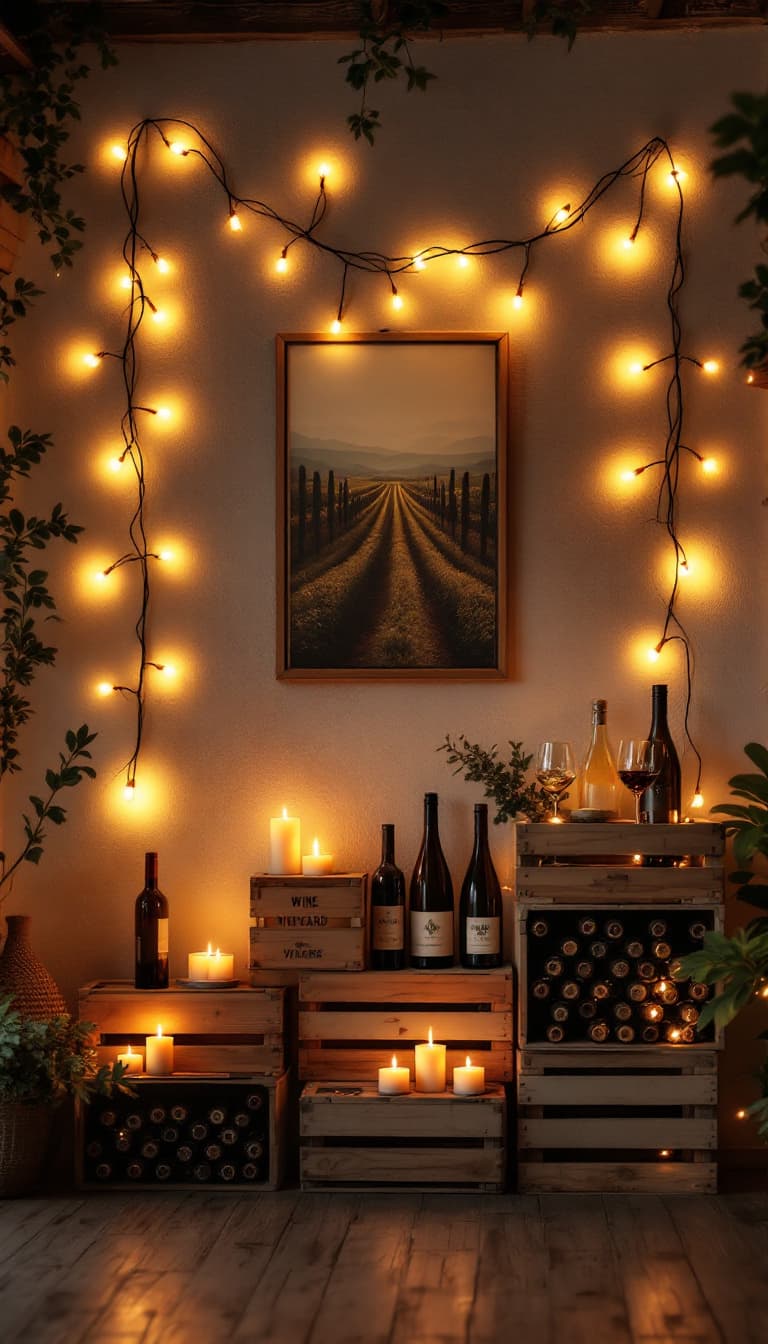
- Fairy lights and string lights: Drape them along a shelf, inside empty bottles, or around your backdrop. Warm white only. Cool white can feel harsh.
- Dim lamps: Swap bright bulbs for 2700K warm bulbs. Aim lights at walls or ceilings to avoid glare on glasses.
Backdrops that scale to any space:
- Vineyard posters: Hang one large print of a well-known region, like Napa or Tuscany. One strong image beats many small ones.
- Burlap runner wall: Run a burlap strip vertically behind the table, then clip a few grapevine branches or eucalyptus along it.
- Bottle and cork display: Stack a few wooden crates with bottles and a bowl of corks. Add a small chalkboard with the night’s theme.
Safety and setup tips:
- Stable surfaces: Place candles on trays or plates, never directly on fabric. Keep cords taped along baseboards.
- Clear walkways: Leave at least 24 inches around the tasting table so guests can move with glasses in hand.
- Zone the space: Make two or three small seating areas with chairs pulled in, side tables for plates, and a lamp or string lights above. Small pools of light invite longer chats.
Simple, warm, and layered. With a few smart choices, your room feels like a vineyard tasting room, without crowding your budget or your schedule.
Fun Wine Tasting Games and Activities to Keep the Party Lively
Games keep guests moving, talking, and learning without breaking the flow. Set up small stations around the room so people mingle and your decor stays intact. Mix quick rounds with short breaks for snacks and chats. Build in a little friendly competition, but keep it welcoming for all skill levels.
Plan a 2 to 3 hour party like this:
- Welcome sip and quick rules, 10 minutes.
- Blind tasting round, 45 to 60 minutes.
- Story-driven trivia, 25 to 35 minutes.
- Short pairing challenge or group chat, 20 minutes.
- Final reveal, prizes, and photos, 10 minutes.
Blind Tasting Challenges for Surprises
Blind tastings spark curiosity and level the playing field. You can run one main flight, or two shorter flights, split by color. Use your numbered mats and candlelit table for mood, then send guests to stations to taste in small groups.
How to set it up:
- Wrap bottles with kraft paper or foil and label them A, B, C.
- Pour into covered glasses or use light linen tasting sleeves to hide color for extra challenge.
- Place water, neutral crackers, and a small dump bucket at each station.
- Prep simple scoring sheets with space for color, aroma, taste, guess, and score.
Scoring that keeps it fun:
- Use a 10 point scale. 2 points for aroma, 2 for taste, 2 for balance, 2 for personal like, 2 for correct guess.
- Tie-breaker, closest guess on grape, region, or price.
- Prize ideas, a corkscrew set, a bottle stopper pair, or pretty glass markers.
Variations for every crowd:
- Beginners, guide with hints. Provide a card listing three grapes to choose from and flavor prompts like citrus, cherry, vanilla.
- Mixed group, keep hints optional. Let guests turn over a hint card only if they want.
- Experts, remove color clues by using black glasses if you have them. Add timed notes, 60 seconds per wine.
Timing tips for a 2 to 3 hour party:
- 3 to 5 wines total works best. Plan 8 to 10 minutes per wine, including notes and quick chat.
- Break after the third wine for water and a snack reset.
- Reveal answers at the end for a big moment, not after each pour.
Add a quick pairing challenge:
- Put out three bites, goat cheese, dark chocolate, and salty chips.
- Ask guests to mark which wine matches each bite best. Discuss why it worked.
Interactive Wine Trivia and Storytelling
Trivia adds energy, stories add heart. Use decorated cards that match your table palette or run a simple slideshow on the wall. Keep rounds short so the room stays lively.
How to play:
- Split into pairs or small teams. Hand out answer sheets and pencils.
- Run two rounds of 8 to 10 questions each. Add a lightning round for ties.
- Between rounds, invite a few guests to share a short wine memory. First vineyard visit, favorite bottle on a trip, or a surprising pairing.
Sample trivia questions:
- Which region is known for Rioja wines? Answer, Spain.
- What grape is used in Sancerre? Answer, Sauvignon Blanc.
- Which Italian region produces Barolo? Answer, Piedmont.
- What is the term for the smell of wine? Answer, aroma or bouquet.
- Champagne is a sparkling wine from which country? Answer, France.
- Malbec is strongly linked to which South American country? Answer, Argentina.
- What does “brut” on a sparkling label indicate? Answer, dry style.
- Which grape is key in Burgundy reds? Answer, Pinot Noir.
- What does “terroir” describe? Answer, the natural environment that affects a wine.
- Name one fortified wine style. Answer, Port, Sherry, or Madeira.
Keep the vibe high without extra props:
- Project the questions with a warm, low-brightness slideshow that matches your decor colors.
- Use your tasting mats as makeshift scorecards to avoid clutter.
- Add quick prompts on a slide to spark stories, First sip you loved, A label that fooled you, A region you want to visit.
Scoring and prizes:
- 1 point per correct answer. Lightning round, 2 points each.
- Award small prizes, a cork keychain, a wine charm set, or a gold paint pen for labeling glasses.
Wrap with a group discussion:
- Ask, Which wine surprised you, and why.
- Share one pairing that worked and one that did not.
- Invite each team to pick one must-try bottle for next time.
These activities fit neatly around your decorated zones, keep guests moving, and make the night feel polished and playful at once.
Pair Perfect Foods and Serving Tips for a Balanced Tasting
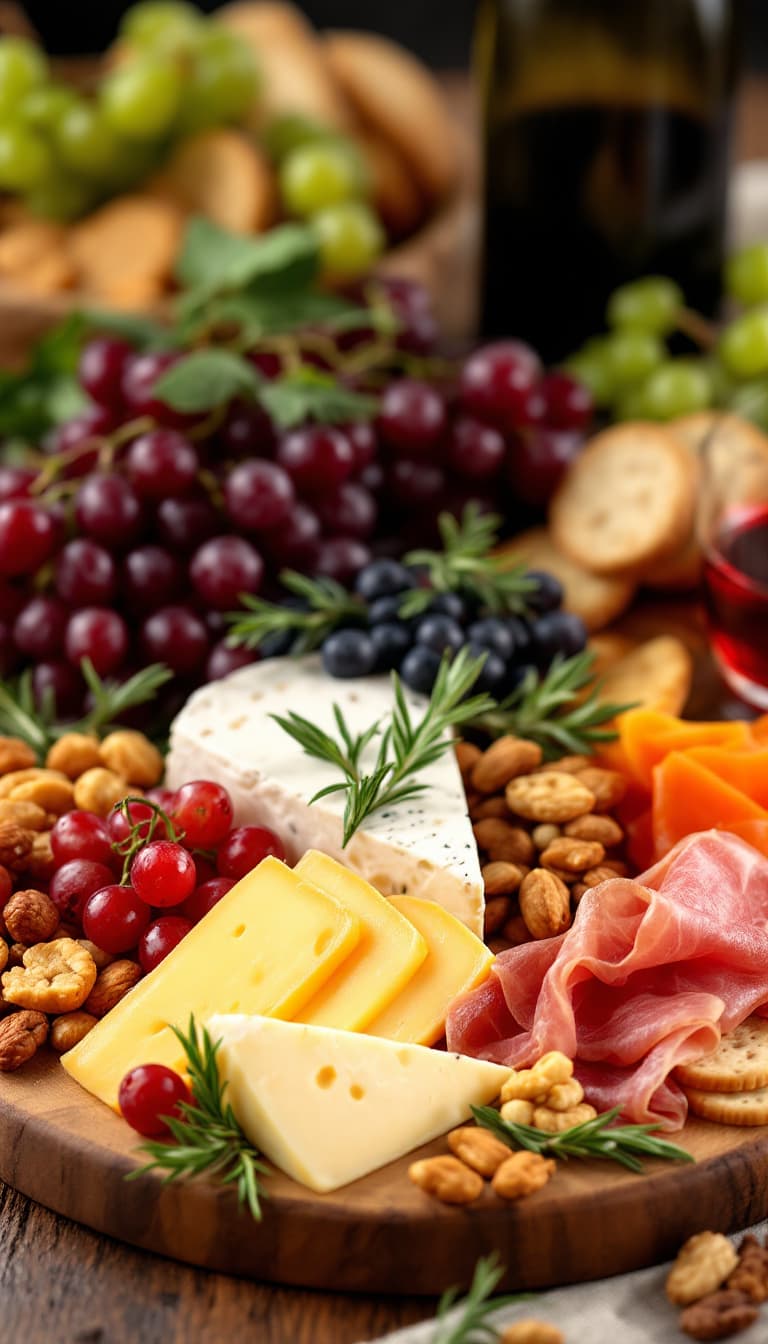
Great pairings keep your tasting smooth, not heavy. Build boards and bites that highlight the wines, match your elegant setup, and flow with the games and decor. Use wooden boards, small bowls, and sprigs of herbs so the food blends right into your table styling.
Cheese and Charcuterie Boards That Complement Wines
Balance creamy, salty, and crunchy textures so guests can reset between pours. For 8 to 12 guests, plan 1.5 to 2 pounds of cheese total, 1 to 1.5 pounds of cured meats, and plenty of neutral crackers.
Try these winning pairings and portions:
| Bite | Wine Style | Portion for 8–12 |
|---|---|---|
| Brie + apple slices | Chardonnay or Champagne | 12–16 oz brie, 3 apples |
| Fresh goat cheese | Sauvignon Blanc or Sancerre | 10–14 oz chèvre |
| Triple-cream (e.g., Délice) | Blanc de Blancs | 8–12 oz |
| Manchego | Rioja or Tempranillo | 12–16 oz |
| Aged gouda | Cabernet Sauvignon or Merlot | 12–16 oz |
| Sharp cheddar | Pinot Noir | 12–16 oz |
| Blue cheese | Port or Sauternes | 8–10 oz |
| Prosciutto | Prosecco or Pinot Grigio | 8–12 oz |
| Genoa salami | Chianti or Zinfandel | 10–14 oz |
| Chorizo | Garnacha | 8–12 oz |
| Smoked salmon (optional) | Sparkling rosé | 8–12 oz |
Add supporting sides:
- Crackers and baguette, 2 to 3 sleeves crackers plus 1 to 2 baguettes.
- Nuts, almonds or walnuts, 2 cups.
- Dried fruit, apricots or figs, 2 cups.
- Briny bites, olives and cornichons, 2 to 3 cups total.
- Honey and mustards, 2 small jars.
- Fresh fruit, grapes and pears, 3 to 4 cups.
Assembly tips that look polished:
- Use 2 to 3 wooden boards to echo your natural decor. Place them near, not on top of, the main pour zone to avoid traffic jams.
- Create clusters in odd numbers. Cheese, fruit, and a small bowl of nuts grouped together reads tidy and inviting.
- Build height with ramekins and tiny bowls. This adds dimension without blocking sightlines.
- Leave negative space. A few inches of open board around each cluster keeps it clean and photo friendly.
- Tuck in herbs that match your palette. Rosemary, thyme, and eucalyptus sprigs tie the board to your table runner and bottle centerpieces.
- Pre-slice firm cheeses and start soft ones with a wedge cut so guests can serve themselves quickly.
- Label with small kraft flags or chalk markers. Add the grape pairing under each name, like “Brie, Chardonnay.”
Smart flow:
- Place a light, white-wine board near the start of the tasting path. Put the richer, red-wine board closer to the end.
- Keep a small refill tray in the fridge. Swap entire boards at once so the table stays neat.
Non-alcoholic pairings that fit:
- Sparkling water with citrus wheels and mint pairs well with brie and goat cheese.
- Alcohol-free rosé with prosciutto or smoked salmon.
- Iced hibiscus tea with manchego and almonds.
Light Appetizers and Sweet Finishes
Stick to simple, make-ahead bites that do not compete with the wines. Prep trays in the morning, then bake or plate right before guests arrive.
Easy savory appetizers:
- Stuffed mushrooms: Fill with herbed cream cheese and breadcrumbs. Bake 18 to 20 minutes at 375°F. Pairs with Pinot Noir or Chianti.
- Caprese skewers: Cherry tomato, mozzarella, basil, a light balsamic drizzle. Great with Pinot Grigio or rosé.
- Endive boats: Spoon in whipped goat cheese, top with chives and a walnut. Pour Sauvignon Blanc alongside.
- Olive tapenade crostini: Spread on toasted baguette, finish with lemon zest. Matches Grenache or Côtes du Rhône.
- Prosciutto-wrapped dates: Bake 10 minutes until crisp. Lovely with Champagne or a light Tempranillo.
Make-ahead plan:
- Mix fillings, slice fruit, and toast crostini the day before. Store airtight.
- Pre-portion on parchment-lined trays. Slide to the oven as guests walk in.
- Plate on warm boards or stoneware so the food stays hot for longer.
Plating in your decorated space:
- Use tiered stands to save table space and add height. Keep the top tier for lighter bites.
- Set napkins and small plates at both ends of the spread. This keeps the line moving.
- Place savory trays near water and crackers to reset palates between pours.
Sweet finishes that flatter dessert wines:
- Chocolate-dipped strawberries: Chill until set. Serve with Port or Lambrusco for a playful twist.
- Dark chocolate squares with sea salt: Simple and elegant with Tawny Port.
- Lemon bars cut small: Bright with Moscato d’Asti or Riesling Spätlese.
- Almond biscotti: Ideal for Vin Santo or coffee for non-drinkers.
Dessert setup that stays clean:
- Put sweets on a separate board away from the main tasting path. Chocolate can mute dry wines, so save it for the end.
- Offer small tasting forks and tongs. Less mess, faster service.
Non-alcoholic sips to round it out:
- Sparkling water bar: Plain, grapefruit, and blood orange, plus citrus wheels and rosemary sprigs.
- Chilled herbal tea: Mint or peach iced tea pairs well with lemon bars and fruit.
- NA bubbles: Alcohol-free sparkling white for toasts and dessert.
Pro move: keep a labeled “refill kit” in the fridge with backup berries, sliced baguette, and extra cheeses. Swapping in fresh elements keeps the table full without breaking the flow or the look.
Conclusion
Host with calm, keep it simple, and let the wine shine. You now have clear wine tasting party ideas and decorations that work in any space. Warm light, clean linens, numbered mats, and tidy labels set an elegant tone without fuss. Small centerpieces, bottle clusters, and a few green sprigs pull the room together.
Build energy with easy activities. A short blind flight, quick trivia, and a friendly reveal keep guests engaged and talking. Give people water and palate resets, and the flow stays smooth. Wrap it up with a fun prize and a group photo near your styled backdrop.
Serve boards that support the wines, not steal the show. Balance creamy, salty, and crunchy, then place lighter bites first and richer bites later. Offer a simple sweet finish and a non-alcoholic option so everyone feels included.
Pick a date, choose a theme, and send the invite. Try one new grape, snap a few photos of your setup, and share them with friends. Your tasting will feel thoughtful, stylish, and easy to repeat next month. Cheers to your next pour.